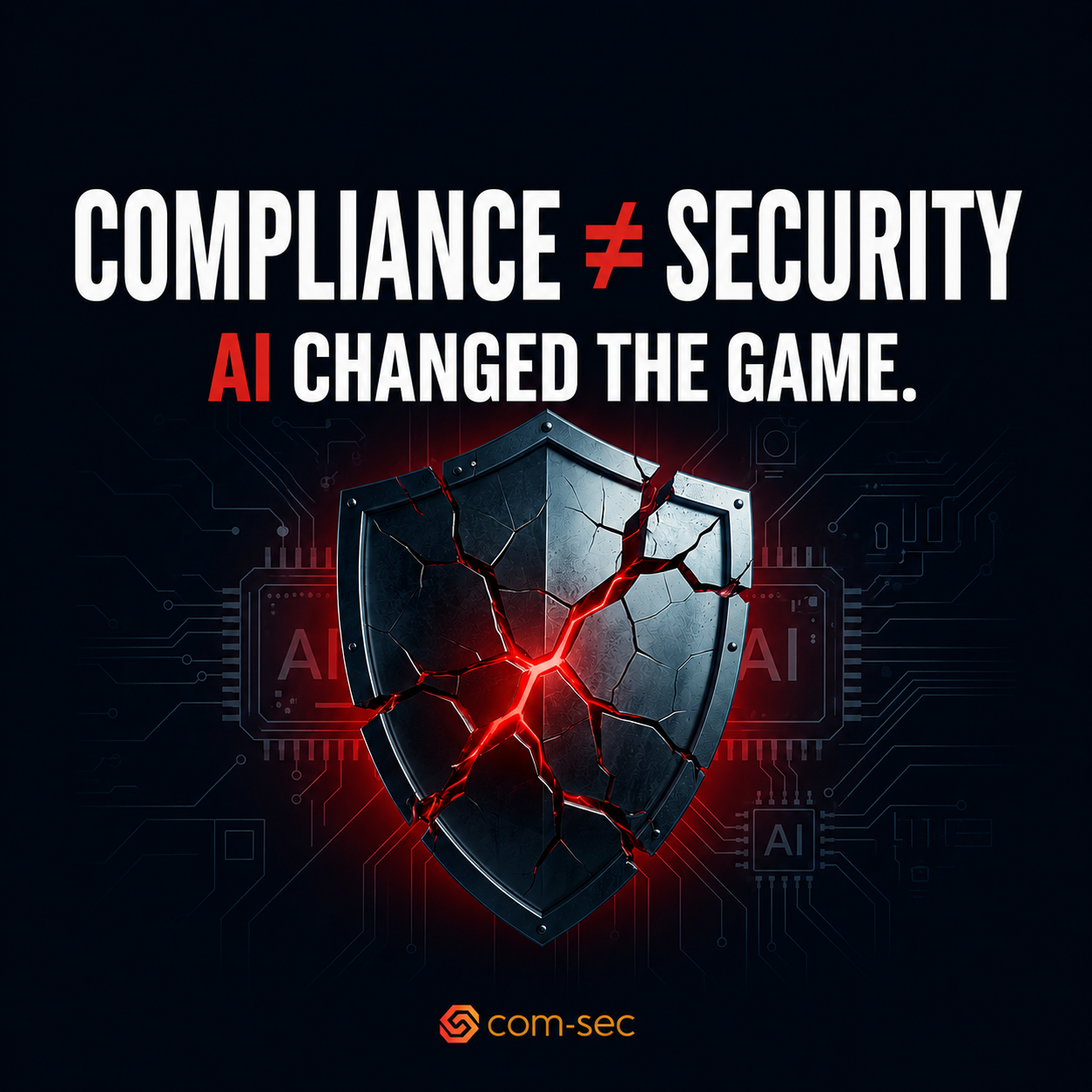
Let me be direct: if your security strategy is "we have a SOC 2," you have a compliance program, not a security program. Those are different things. Mythos just made the difference impossible to ignore.
Compliance is a foundation, not a finish line
SOC 2, ISO 27001, HIPAA, HITRUST: these frameworks exist to give customers, partners, and regulators confidence that you've thought about security and built some structure around it. They're valuable. I help companies get through these audits every day.
But none of them were designed to protect you from an AI that can autonomously discover and exploit zero-day vulnerabilities across your entire stack in hours.
Compliance frameworks test whether your controls are designed and operating as described. They check whether you have an access review process, whether you encrypt data in transit, whether you do security awareness training. They don't measure how fast you can respond when three critical zero-days drop in the same week. They don't test whether your incident response plan actually works under pressure.
Where the gap shows up
Here's what I see regularly with startups and mid-market companies:
Annual risk assessments that sit on a shelf. You did the risk assessment for your SOC 2 audit. It checked a box. But it hasn't been updated since, and it doesn't reflect the threat landscape that exists today.
Policies that describe intent, not practice. Your vulnerability management policy says you patch critical vulnerabilities within 30 days. That was arguably acceptable before. It's not anymore. And the policy doesn't help if the actual practice is closer to 60 or 90 days.
Audit evidence that's a snapshot, not a system. SOC 2 Type II covers a review period, but it's still a backward-looking assessment. It tells you what happened during that window. It doesn't tell you whether your security posture is keeping up with a threat environment that changes weekly.
Security questionnaires answered optimistically. When a customer asks "do you have a vulnerability management program," the answer is "yes." But the follow-up question, "how quickly can you respond to a critical zero-day," often doesn't have a good answer.
What compliance gets right
I'm not saying compliance is useless. It's not. The discipline of going through SOC 2 or ISO 27001 forces you to think about access controls, change management, incident response, risk assessment, and vendor management. Those are real capabilities that matter.
The problem is when companies treat the audit as the goal instead of the starting point. The audit confirms you have a program. It doesn't confirm the program is good enough for what's coming.
What to do about it
Treat your compliance program as a floor. Use it to build structure, but don't assume passing an audit means you're secure. Layer real operational security on top.
Update your risk assessment for AI-driven threats. If your risk register doesn't account for the possibility of AI-accelerated attacks, it's outdated. This doesn't need to be a massive exercise. Add it, score it, and decide what controls address it.
Stress-test your incident response. Run a tabletop exercise where three critical vulnerabilities hit your environment in the same week. See how your team responds. Identify the gaps.
Be honest in security questionnaires. Don't overstate your capabilities. If your patching timeline is 30 days, say so. If you're working to get it down, say that too. Customers respect honesty more than polished answers that fall apart under scrutiny.
The shift
The bar for "reasonable security" is moving. Regulators, insurers, and enterprise buyers are all recalibrating what they expect. Forrester has pointed out that Mythos effectively resets the standard for "reasonable care" in security. Companies that rely solely on compliance certifications without investing in actual operational security are going to feel that shift.
Up next in the series
In Part 4, we'll talk about the stuff that actually protects you, and why the basics still matter more than the headlines.
Read Part 4 →
Farbod Fakhrai is the founder of Com-Sec, a cybersecurity and compliance consulting firm supporting startups and growth-stage companies.