Every time something like Mythos makes the news, there's a rush toward shiny solutions. New platforms. New tools. New AI-powered defense products. Some of those will be useful. Most of them are premature if you haven't nailed the fundamentals.
The UK's National Cyber Security Centre made this point clearly after reviewing Mythos: the most important response is getting the basics right. Asset management, access controls, security configuration, patching, and logging. The AISI evaluation reached the same conclusion. Mythos exploits systems with weak security posture. If your posture is strong, you're a harder target regardless of what tools attackers use.
The fundamentals that matter most
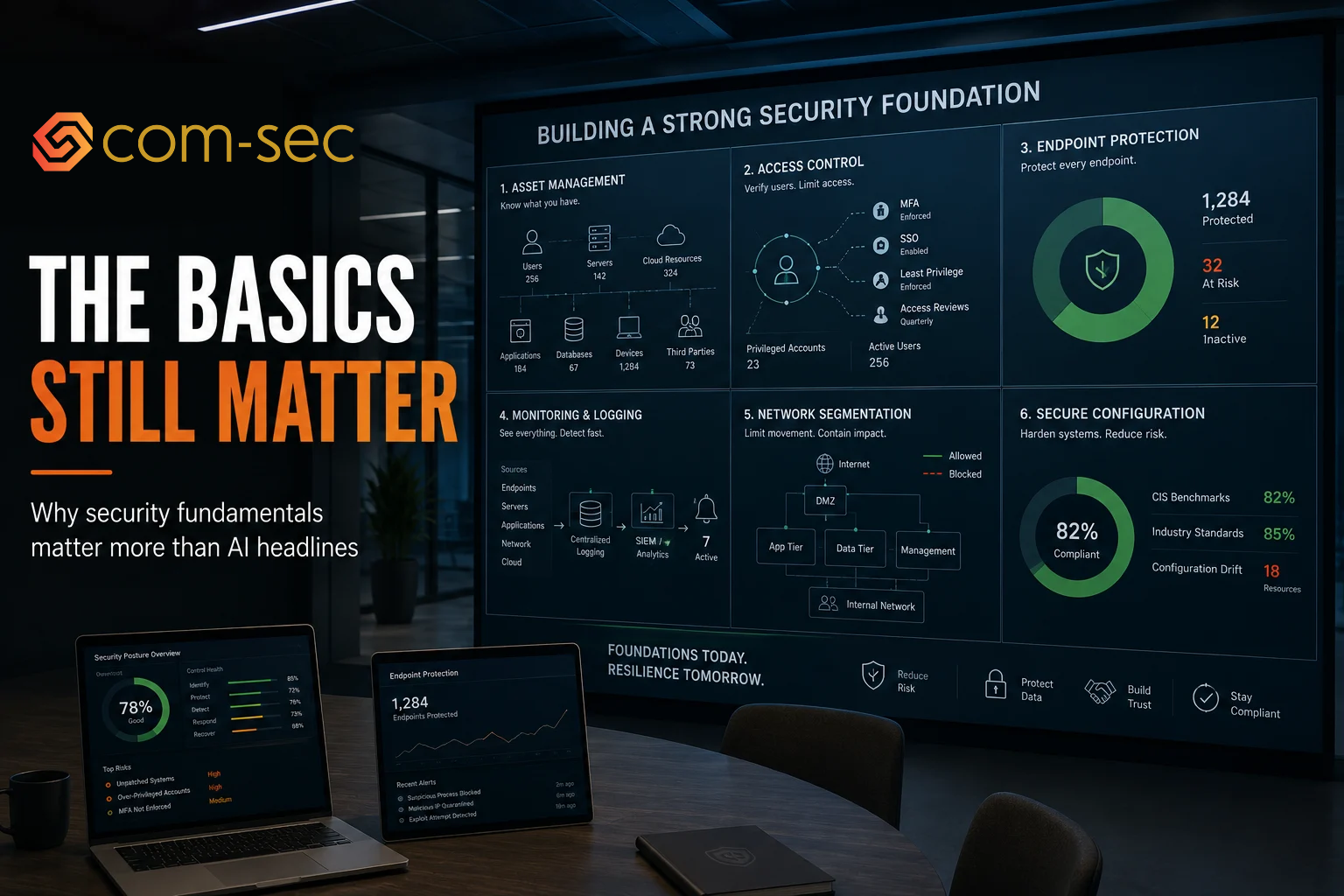
Know what you have. You can't protect what you can't see. Maintain a current inventory of your systems, applications, cloud resources, and third-party integrations. Shadow IT and forgotten services are exactly the kind of thing AI-powered scanning will find first.
Control access tightly. MFA everywhere. Least-privilege access. Regular access reviews. Remove stale accounts. This isn't new advice, but it's the single most effective thing you can do. Most breaches still start with compromised credentials or over-privileged accounts.
Protect endpoints. Every laptop, workstation, and server should have EDR (endpoint detection and response). If you're a Mac shop and think you're immune, you're not. Mythos found vulnerabilities in macOS too.
Log and monitor. If something happens in your environment and nobody sees it, you can't respond to it. Centralized logging with alerting on suspicious activity is table stakes. You don't need a full SOC. You need enough visibility to know when something is wrong.
Segment your environment. If an attacker gets into one system, can they move laterally across your entire network? Network segmentation and zero-trust architecture limit blast radius. When AI can chain vulnerabilities across your stack, containment is the difference between a minor incident and a business-ending event.
Harden your configurations. Default settings are almost never secure. Review your cloud configurations, disable unnecessary services, and follow hardening benchmarks (CIS benchmarks are free and practical).
Why startups skip this stuff
I get it. You're moving fast. You have 15 employees and no dedicated security person. Every hour spent on security is an hour not spent on product or customers.
But the math has changed. The cost of getting breached has always been high. Now the probability of getting breached is higher too, because the tools available to attackers are getting dramatically better. A basic security posture that would have been adequate two years ago may not hold up against AI-assisted attacks.
The good news: for most startups, getting these fundamentals right is not a massive lift. It's not a six-month project. It's a series of practical decisions and configurations that a competent security advisor can help you work through in weeks, not months.
The trap to avoid
Don't let the Mythos headlines push you toward buying tools you don't need yet. I've seen companies spend $50K on a SIEM before they've turned on MFA for their admin accounts. That's backwards.
Get the basics locked down. Then layer on tooling and automation where it makes sense. The order matters.
Where AI helps on defense
There is a real defensive upside to AI in security. AI-powered code review can catch vulnerabilities before they ship. AI-assisted monitoring can identify anomalies faster than manual review. AI can help automate patching workflows and prioritize remediation.
But these tools work best when they're built on top of a solid foundation. AI-assisted defense on top of a messy, unmanaged environment just generates more noise.
Up next in the series
In Part 5, we'll put it all together: what a Mythos-ready security program actually looks like for a startup or growth-stage company.
Read Part 5 →
Farbod Fakhrai is the founder of Com-Sec, a cybersecurity and compliance consulting firm supporting startups and growth-stage companies.