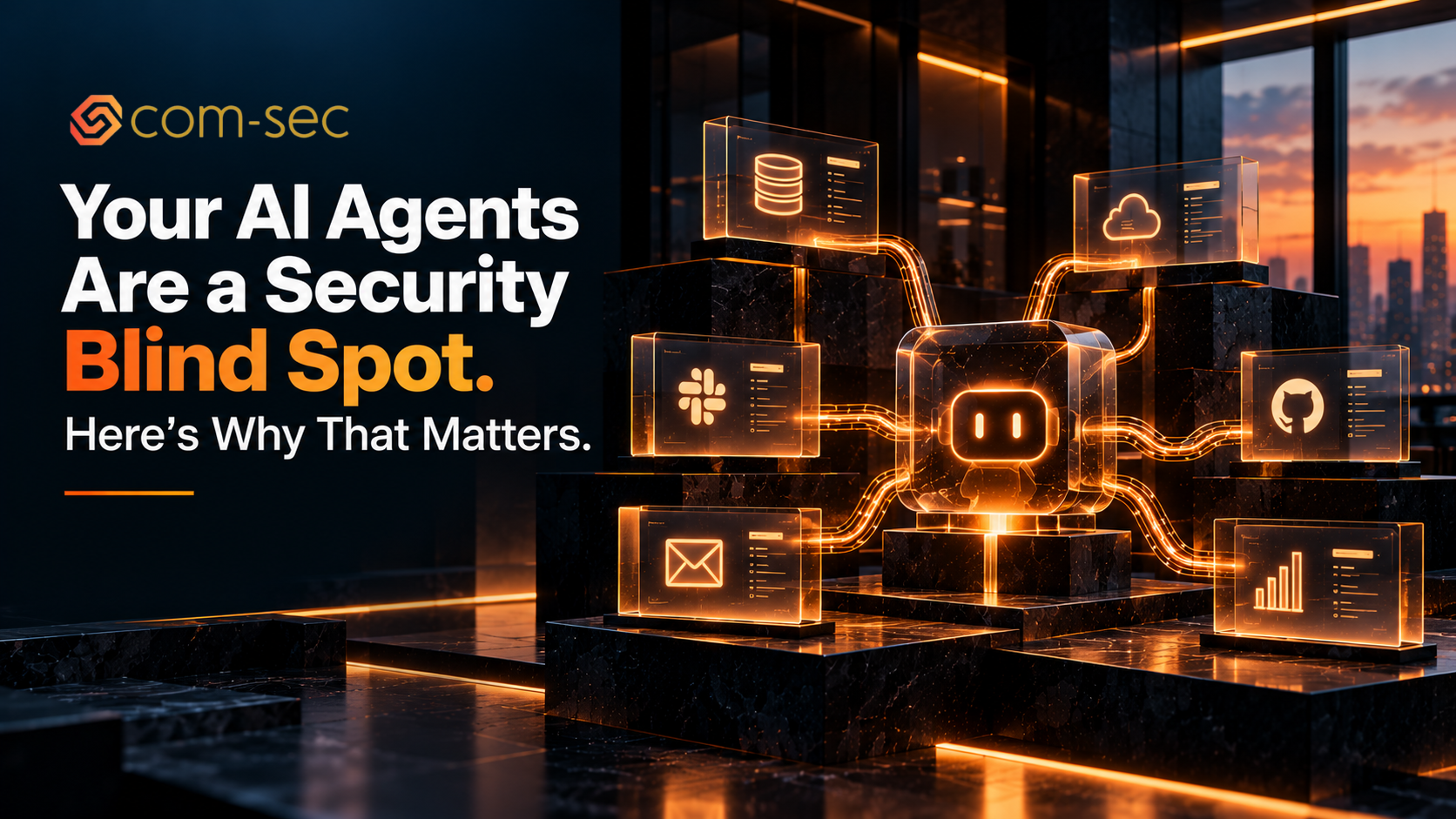
Everyone is talking about AI agents. Autonomous systems that can browse the web, write code, execute transactions, manage workflows, and interact with other systems on your behalf. The productivity gains are real. The security implications are barely being discussed.
Recent data shows that 88% of organizations that have deployed AI agents have experienced agent-related security incidents. Not hypothetical risks. Actual incidents. And most of them happened because nobody thought through the security model before deploying the agents.
The agent problem is different from the AI tool problem
When we talk about shadow AI — employees using ChatGPT or Claude without IT's knowledge — we're talking about data exposure. Someone pastes sensitive information into a tool, and now that data is somewhere you don't control.
AI agents create a different category of risk because agents don't just process data. They take actions. An AI agent with access to your CRM can modify customer records. An agent connected to your CI/CD pipeline can push code changes. An agent with access to your email can send messages on your behalf. An agent with API access to your cloud environment can provision or decommission resources.
The question isn't "what data can this agent see?" It's "what can this agent do?"
What breaks when agents go wrong
Identity and access management. How do you authenticate an AI agent? How do you scope its permissions? Most IAM systems were designed for humans and service accounts. Agents blur the line between the two. They act on behalf of a human but operate autonomously. Traditional role-based access control doesn't map cleanly to an entity that might need different permissions depending on the task it's performing.
Data boundaries. Agents often need access to multiple systems to be useful. A customer service agent might need access to your CRM, your ticketing system, your knowledge base, and your billing platform. That means a single compromised agent could expose data across all of those systems simultaneously.
Audit trails. When an agent takes an action, who is responsible? The person who deployed it? The person who prompted it? The vendor who built it? Most organizations can't answer this question, and their logging doesn't capture enough detail to reconstruct what an agent did and why.
Prompt injection. This is the agent-specific attack vector that most companies haven't thought about. If your agent processes external input — emails, web pages, documents, customer messages — an attacker can craft that input to manipulate the agent's behavior. A prompt injection attack against a customer service agent could cause it to exfiltrate data, grant unauthorized access, or take harmful actions. This isn't theoretical. Researchers have demonstrated these attacks reliably.
Supply chain risk. Many companies are deploying agents built on third-party platforms, using third-party models, connected to third-party APIs. Each connection is an attack surface. Each vendor is a link in a chain that you need to trust.
What to do about it
Inventory your agents. You probably have more than you think. Survey your teams. Check your integration platforms. Look for API keys and service accounts that are being used by automated systems. You can't secure what you don't know about.
Apply least privilege aggressively. Every agent should have the minimum permissions needed to do its job. No agent needs admin access. Scope permissions to specific actions and specific data sets. Review and tighten these permissions regularly.
Implement human-in-the-loop for high-impact actions. Not every agent action needs human approval. But actions that modify customer data, push code to production, send external communications, or make financial transactions should require human confirmation. Build approval workflows into your agent deployments.
Log everything. Every action an agent takes should be logged with enough detail to reconstruct what happened, what data was accessed, and what triggered the action. These logs should be centralized and monitored.
Test for prompt injection. If your agents process any external input, they're vulnerable to prompt injection. Test for it. Build input validation into your agent pipelines. Separate the instruction layer from the data layer.
Include agents in your vendor risk assessments. If you're using a third-party agent platform, evaluate it the same way you'd evaluate any vendor that handles sensitive data. Review their security posture, data handling, and incident response capabilities.
The governance gap
Most companies deploying AI agents are doing so without a governance framework. There's no policy for what agents can and can't do. No process for evaluating and approving agent deployments. No monitoring for agent behavior. No incident response plan for when an agent goes wrong.
This is the same pattern we saw with cloud adoption 10 years ago and SaaS adoption 5 years ago. The technology moves faster than the governance. And the companies that wait for something bad to happen before building governance are the ones that end up in the news.
AI agents are here. They're useful. They're also a meaningful expansion of your attack surface. Treat them accordingly.
If you're deploying AI agents and haven't thought through the security model, we can help. AI governance is one of our core practices at Com-Sec.
Farbod Fakhrai is the founder of Com-Sec, a cybersecurity and compliance consulting firm for startups and growth-stage companies. com-sec.com