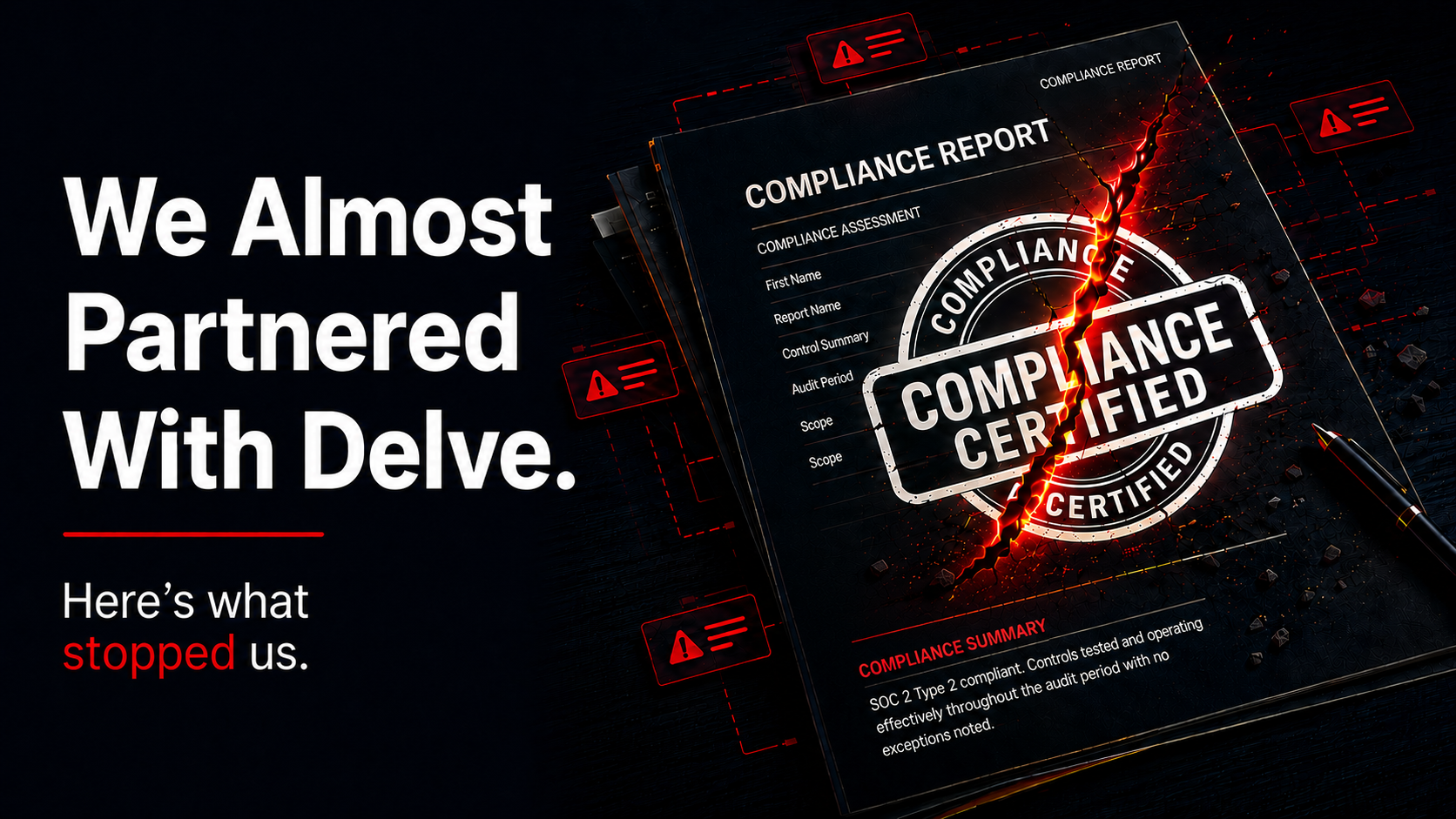
By now, most people in the compliance world know what happened with Delve. The whistleblower report. The fabricated audit evidence. The identical SOC 2 reports. The rubber-stamp auditors. Y Combinator asking the founders to leave the program. A $300 million valuation collapsing under the weight of allegations that the whole thing was, as the whistleblower put it, "fake compliance as a service."
What most people don't know is that Com-Sec was weeks away from being their lead vCISO partner for HITRUST clients.
The opportunity looked great
As a small company, you fight hard for every client and every referral. When Delve approached us about a partnership, the pitch was compelling: they had a large and growing client base, many of them in healthcare, and they needed experienced vCISO support to help their HITRUST clients get through the process. We would be the go-to partner for that work.
For a firm our size, access to that kind of client pipeline was significant. I enjoyed my conversations with their founding team. They were sharp, moved fast, and seemed to have real traction. We started putting together a co-branded blog post. We were building the relationship and getting ready to kick things off.
Then things started feeling off
Right before we were about to formally launch the partnership, small things started not adding up. We were getting requests to turn things around over weekends and after hours on timelines that didn't make sense. Deliverables that normally take careful review were being treated as checkbox items to knock out as fast as possible. The urgency wasn't the kind that comes from a client in a crunch. It was the kind that comes from a process that's been designed to skip steps.
Something felt fishy. I couldn't point to one specific thing, but the overall pattern didn't sit right with how we approach compliance work. We slowed down. We stopped rushing to get the partnership finalized. We pulled back on the co-branded content. We decided to wait and see.
The next month, it all came out
In March, the DeepDelver whistleblower report dropped. Nearly 500 draft SOC 2 reports that were 99.8% identical. Pre-written auditor conclusions generated before clients even submitted evidence. Fabricated board meeting minutes. Audit firms that were rubber-stamping reports without independent testing. Hundreds of companies, some publicly traded, some handling PHI for millions of patients, potentially exposed to regulatory liability because they trusted a platform that was producing the appearance of compliance without the substance.
Y Combinator removed them. Customers scrambled to figure out whether their certifications were even valid. The compliance industry had its Theranos moment.
And we had dodged a bullet.
The lesson
Trust your instincts. When something feels off in a business relationship, slow down. The pressure to move fast, especially when the opportunity looks good, can override the signals your experience is sending you. In compliance especially, speed that comes at the expense of rigor is a red flag, not a feature.
Vet your partners the way you'd vet a vendor. We tell our clients to scrutinize their vendors' security posture. The same standard applies to business partnerships. A compelling pitch and a large client base don't mean the underlying operation is sound.
There are no shortcuts in compliance. This is the core of it. SOC 2, ISO 27001, HITRUST: these frameworks exist to provide real assurance that real controls are in place and operating effectively. When someone promises to get it done in days instead of weeks, or treats evidence collection as an afterthought, they're not innovating. They're cutting corners. And eventually, the corners catch up.
Protect your reputation above all else. If we had gone all-in on that partnership, our name would have been attached to work product built on a fraudulent foundation. For a small firm, that's not a setback. That's potentially fatal. The short-term revenue wasn't worth the long-term risk, even though we didn't fully understand the risk at the time.
The bigger picture
The Delve scandal wasn't just about one company. It exposed a structural weakness in how the market treats compliance: as a product to be purchased rather than a discipline to be practiced. When the incentive is to get the certificate as fast and cheap as possible, corners will get cut. Sometimes by the company. Sometimes by the platform. Sometimes by the auditor.
The companies that came out of this fine were the ones that treated compliance as a real operational practice, not a checkbox. They had controls that actually worked. They had evidence that reflected reality. They had auditors who did real testing. That's the standard. It always has been.
We're glad we weren't part of the other side of that story.
Farbod Fakhrai is the founder of Com-Sec, a cybersecurity and compliance consulting firm supporting startups and growth-stage companies.