If you're preparing for a SOC 2 audit, knowing the process isn't enough. You need to know exactly what auditors expect to see.
Many organizations understand SOC 2 compliance, but struggle when it comes to execution. What controls should be in place? What documentation is required? And what does a SOC 2 report actually include?
This guide answers those questions with a practical, easy-to-follow approach, combining a clear SOC 2 audit checklist with insights into report structure so you can move forward with confidence.
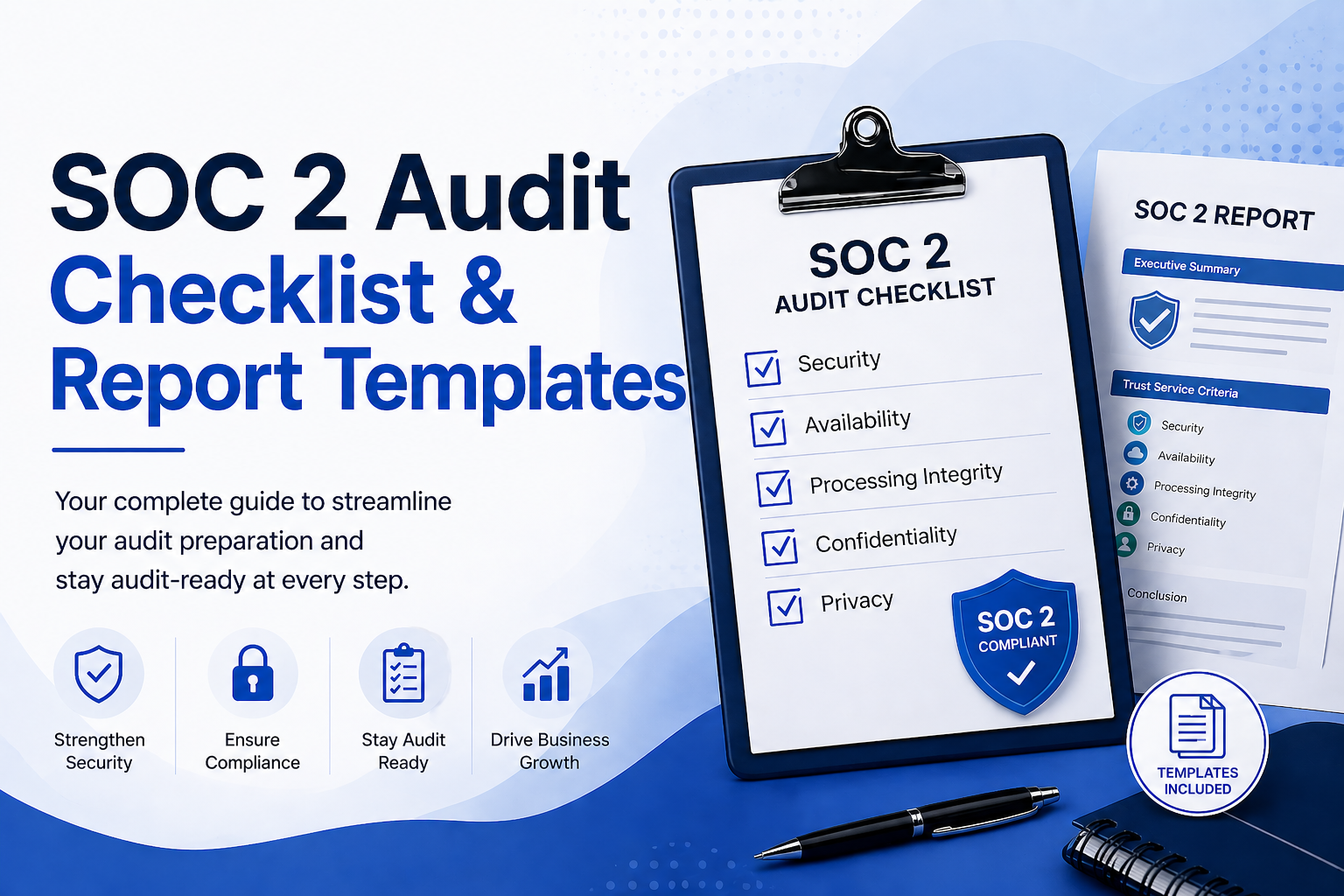
SOC 2 Audit Checklist
A SOC 2 audit checklist is more than a list of tasks. It is a structured way to validate whether your organization is truly ready for an audit.
Instead of scrambling at the last minute, a well-prepared checklist helps you align your systems, policies, and processes with audit expectations. It also gives your team visibility into gaps before they become problems.
In many cases, companies begin with a SOC 2 Assessment to evaluate their current state and identify what needs improvement. This makes the checklist far more effective because it is based on real gaps, not assumptions.
Complete SOC 2 Checklist
To make this practical, it helps to break the checklist into key areas that auditors typically evaluate.
🔐 Security Checklist
To meet SOC 2 requirements, your organization should implement and maintain the following security controls:
- Enable multi-factor authentication (MFA) for all critical systems
- Enforce strong password policies and regular password updates
- Use firewalls and secure network configurations
- Encrypt sensitive data both at rest and in transit
- Deploy endpoint protection and antivirus solutions
- Regularly update and patch systems to address vulnerabilities
These measures help ensure your systems are protected against unauthorized access and evolving security threats.
👤 Access Control Checklist
Effective access control ensures that only authorized individuals can access sensitive systems and data.
- Implement role-based access control (RBAC)
- Grant access based on job roles and responsibilities
- Conduct periodic access reviews and audits
- Immediately revoke access for terminated or inactive users
- Maintain logs of access requests, approvals, and changes
Strong access control reduces internal risks and demonstrates accountability during audits.
📊 Monitoring & Logging Checklist
Continuous monitoring is essential for detecting and responding to potential security incidents.
- Enable logging across systems, applications, and infrastructure
- Monitor login activity and user behavior
- Set up alerts for suspicious or unusual activity
- Retain logs for a defined audit period
- Regularly review logs to identify anomalies
These practices show that your organization actively monitors its environment, not just implements controls.
📄 Documentation Checklist
Proper documentation is critical for demonstrating compliance during a SOC 2 audit.
- Maintain up-to-date security policies and procedures
- Document incident response and disaster recovery plans
- Keep records of employee security training
- Track system changes and configuration updates
- Store evidence of control execution and reviews
Clear documentation ensures that your controls can be verified and validated by auditors.
SOC 2 Report Template (Sample Structure)
Understanding what a SOC 2 report includes helps you prepare better. A typical SOC 2 report contains:
1. Independent Auditor's Report
An overview of the audit findings and the auditor's opinion.
2. Management's Assertion
A statement from your organization confirming that controls are properly designed and implemented.
3. System Description
Details about your systems, processes, and infrastructure.
4. Control Objectives & Controls
A breakdown of each control and its purpose.
5. Tests of Controls
Evidence showing how controls were tested by the auditor.
6. Results of Testing
Outcomes of the audit, including any exceptions or issues.
This structure helps customers and stakeholders understand how your organization manages security and compliance.
How to Use This Checklist Effectively
A checklist is only useful if it is applied correctly.
Rather than treating it as a one-time exercise, it should be integrated into your ongoing operations. Start by reviewing each area and identifying gaps, then prioritize improvements based on risk and impact.
Many organizations also rely on SOC 2 compliance services or automation tools to streamline this process. These solutions help with continuous monitoring, evidence collection, and maintaining audit readiness over time.
The goal isn't just to pass an audit. It's to build a system that consistently meets compliance requirements.
Common Mistakes When Using SOC 2 Checklists
Even with a structured checklist, organizations can run into challenges.
One common mistake is treating the checklist as a simple task list rather than a reflection of real-world practices. Controls may be implemented, but if they are not consistently followed, they may fail during testing.
Another issue is relying too heavily on generic templates. While templates are helpful, they must be adapted to match your actual systems and workflows.
Finally, many teams underestimate the importance of ongoing monitoring and documentation, which can lead to gaps during the audit.
Conclusion
A well-structured SOC 2 audit checklist brings clarity and confidence to what can otherwise feel like a complex process. By focusing on key areas such as security, access control, monitoring, and documentation, organizations can better align with audit expectations and reduce last-minute risks.
Understanding how a SOC 2 report is structured also helps teams prepare more effectively, ensuring there are no surprises during the audit.
At the end of the day, SOC 2 compliance isn't just about passing an audit. It's about building trust, strengthening your security posture, and supporting long-term business growth. With the right approach and guidance from experts like Com-Sec, organizations can streamline their compliance journey and stay audit-ready at all times.